Day trip to Lismore, the “Great Garden”
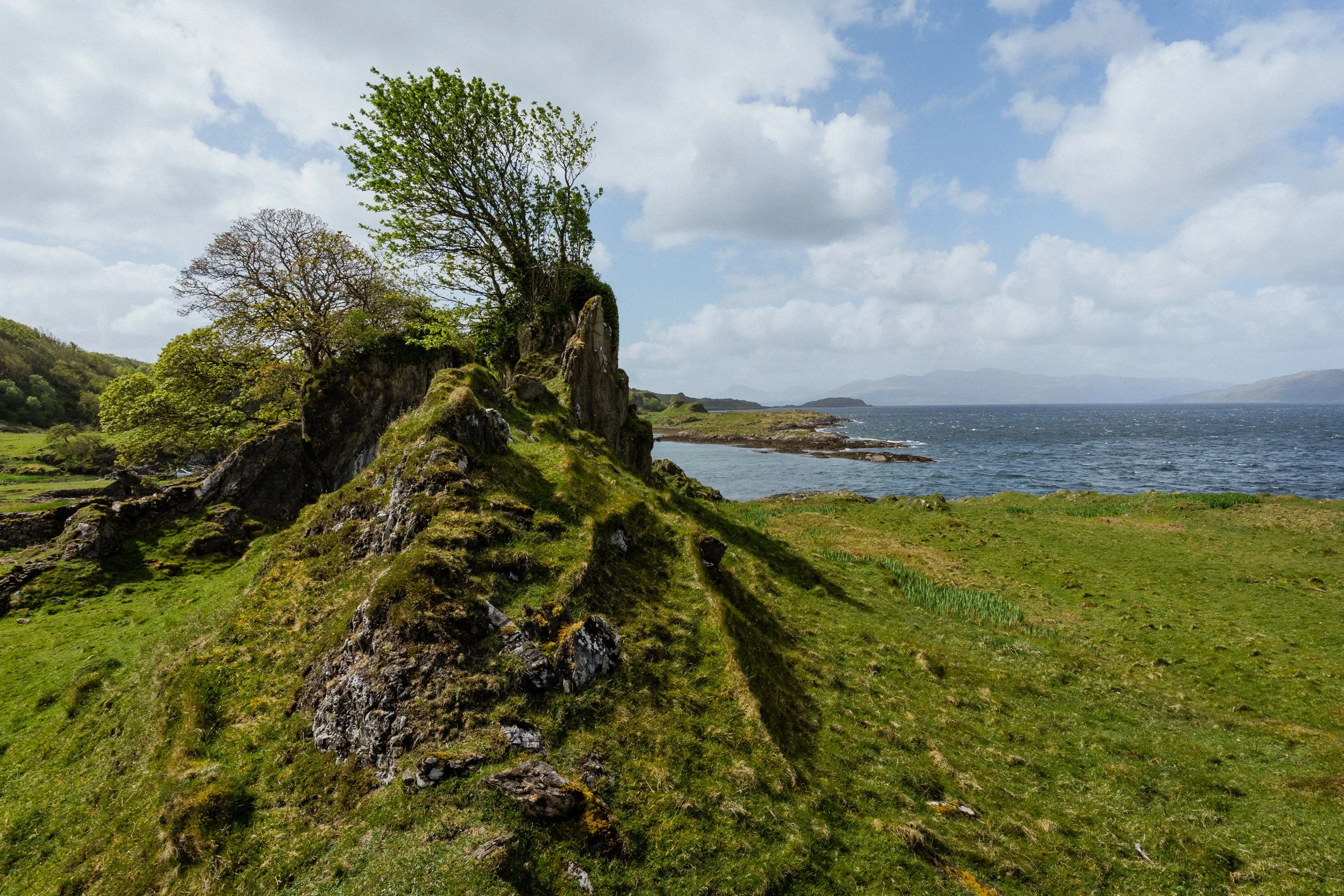
Rock outcroppings at An Sailean, Lismore.
A daytrip to the isle of Lismore was the highlight of my recent vacation in Scotland. The morning was wet and windy, with heavy gray clouds scudding quickly overhead. A rainbow appeared, then faded away as my mother and I boarded the 9:00 AM ferry at the Oban pier. The water was choppy and as gray as the sky, and I wondered if we were in for a rough crossing. But within a few minutes the sun was shining and the mist began to clear, revealing distant mountains and low, green islets all around us.
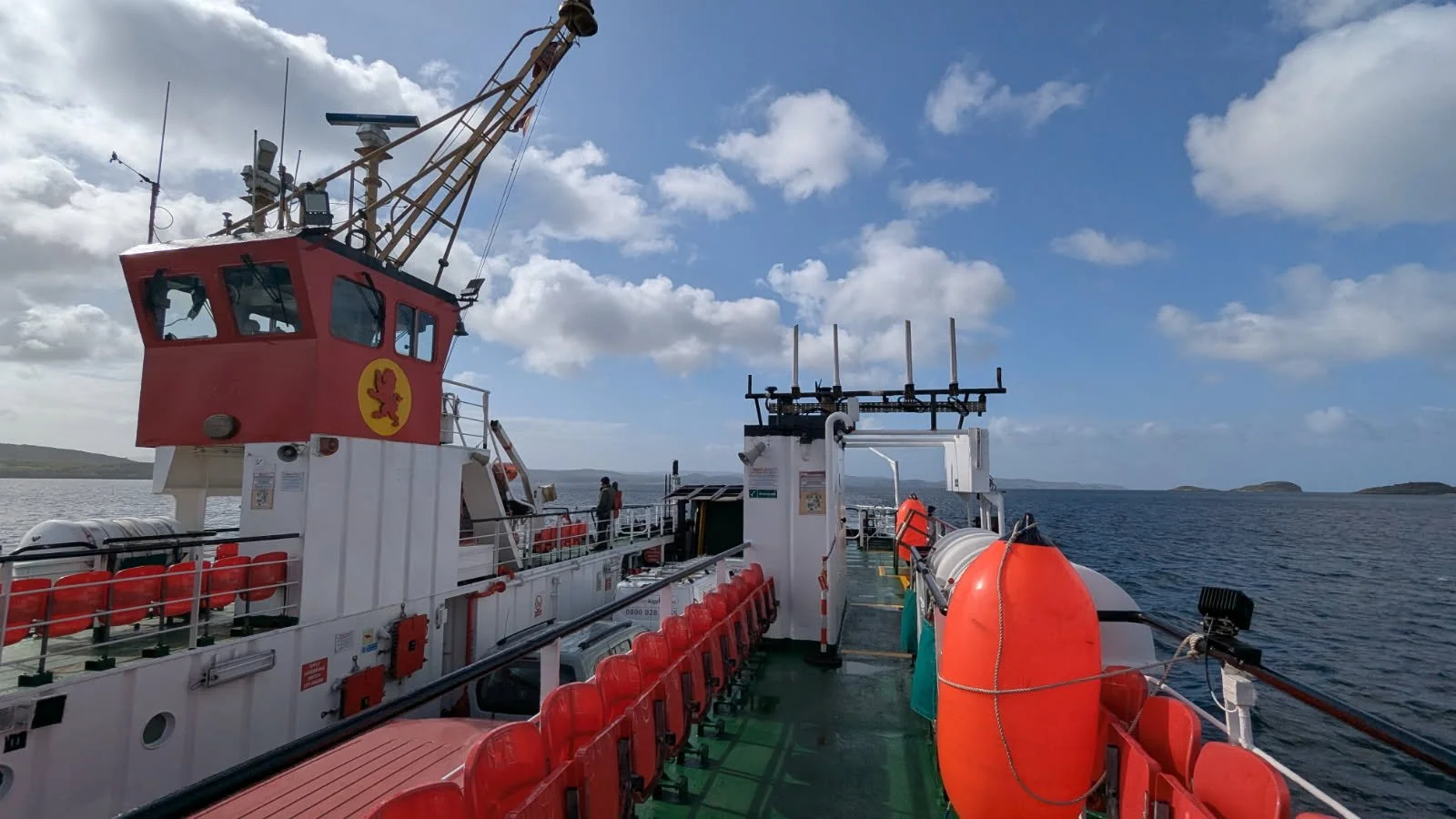
The CalMac ferry’s observation deck.
Lismore lies off the west coast of Scotland within Loch Linnhe, a sea loch that is surrounded on almost all sides by the Scottish mainland or the isle of Mull. The island itself is ten miles long and one mile wide, and around two hundred people live there year-round. Apparently, many islanders still speak Gaelic, and the island’s Gaelic name Lios Mòr means ‘the great garden’. Besides us, the only other ferry-goers on this spring Tuesday were a retired Scottish couple, a gas line repairman, and an older woman who was clearly a local judging by the way she napped for the entire 50-minute crossing. It was already proving to be a very different experience than my trip to Skye, the only other Scottish island I have visited.
The ferry boat made a long slow turn and docked at the tiny hamlet of Achnacroish, on Lismore’s sheltered eastern shore. We disembarked and walked up the sloping ramp up to a small car park. Our tour guide had not yet arrived and we loitered, admiring the quaint cottages along the waterfront and the sparkling blue shallows. The woman from the ferry had already driven off, but to our surprise she soon returned with her window rolled down to kindly ask us if we needed help. When we told her we were waiting for our tour guide, she smiled knowingly and wished us well.
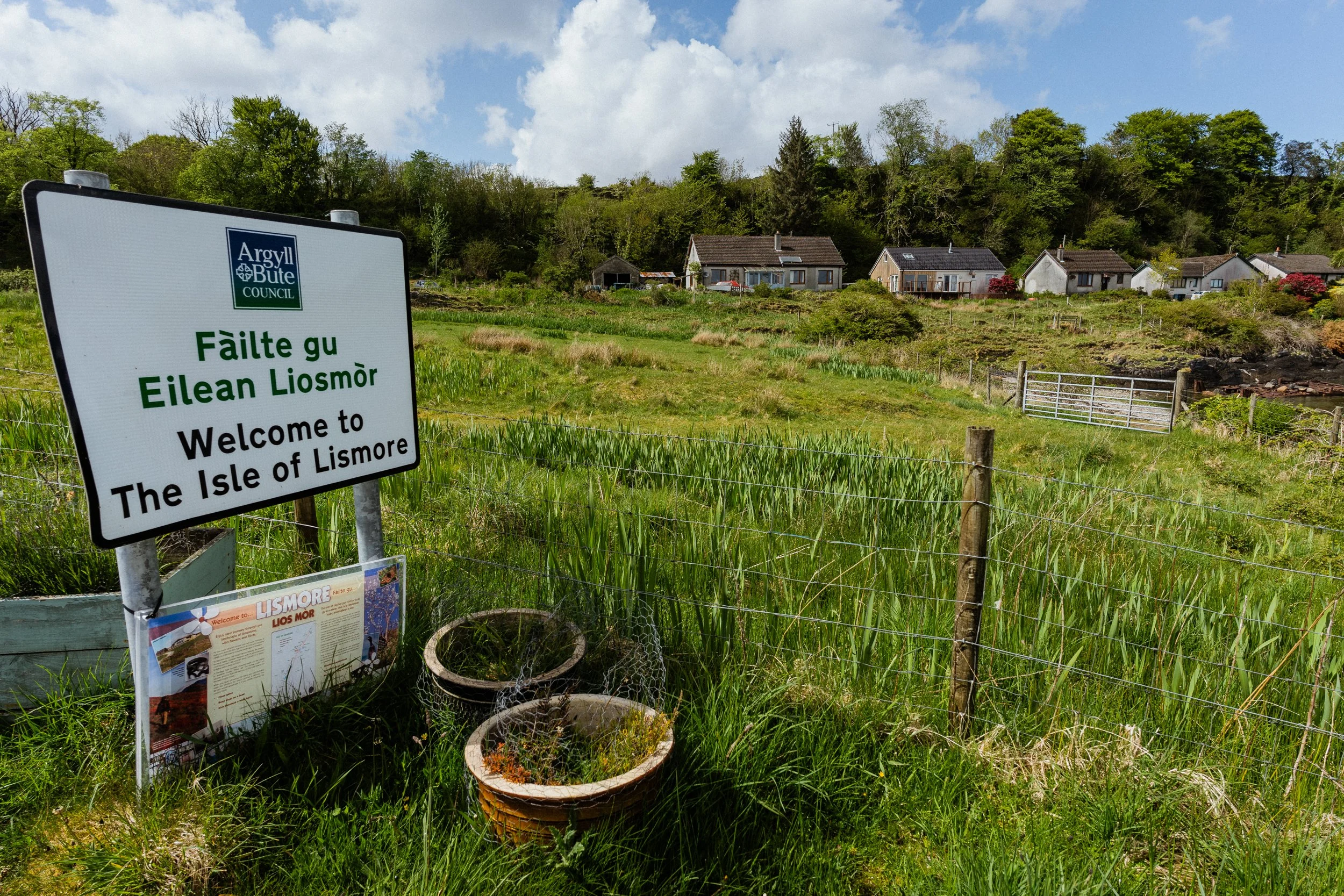
Welcome sign and cottages near the ferry pier at Achnacroish, Lismore.
After another few minutes, Iris arrived in her dark green Land Rover and began to show us around. For someone with such a thick brogue, we were surprised to learn that our tour guide was originally from the Netherlands. Her studies had brought her to Lismore over a decade ago, where she met a local man and decided to stay. I, for one, could not blame her. The raw natural beauty and charming small-town vibe of the island had already hooked me.
After a quick visit to Lismore’s combination post office/general store (the only one on the island), we made our way to Tirefour Broch, the picturesque ruins of a prehistoric fortress. Dating to the Iron Age, the two thousand year old structure sits atop a rocky outcrop, with a fantastic view of Eilean Dubh (‘Black Island’), the Lynn of Lorn, and mighty Ben Cruachan far to the east.
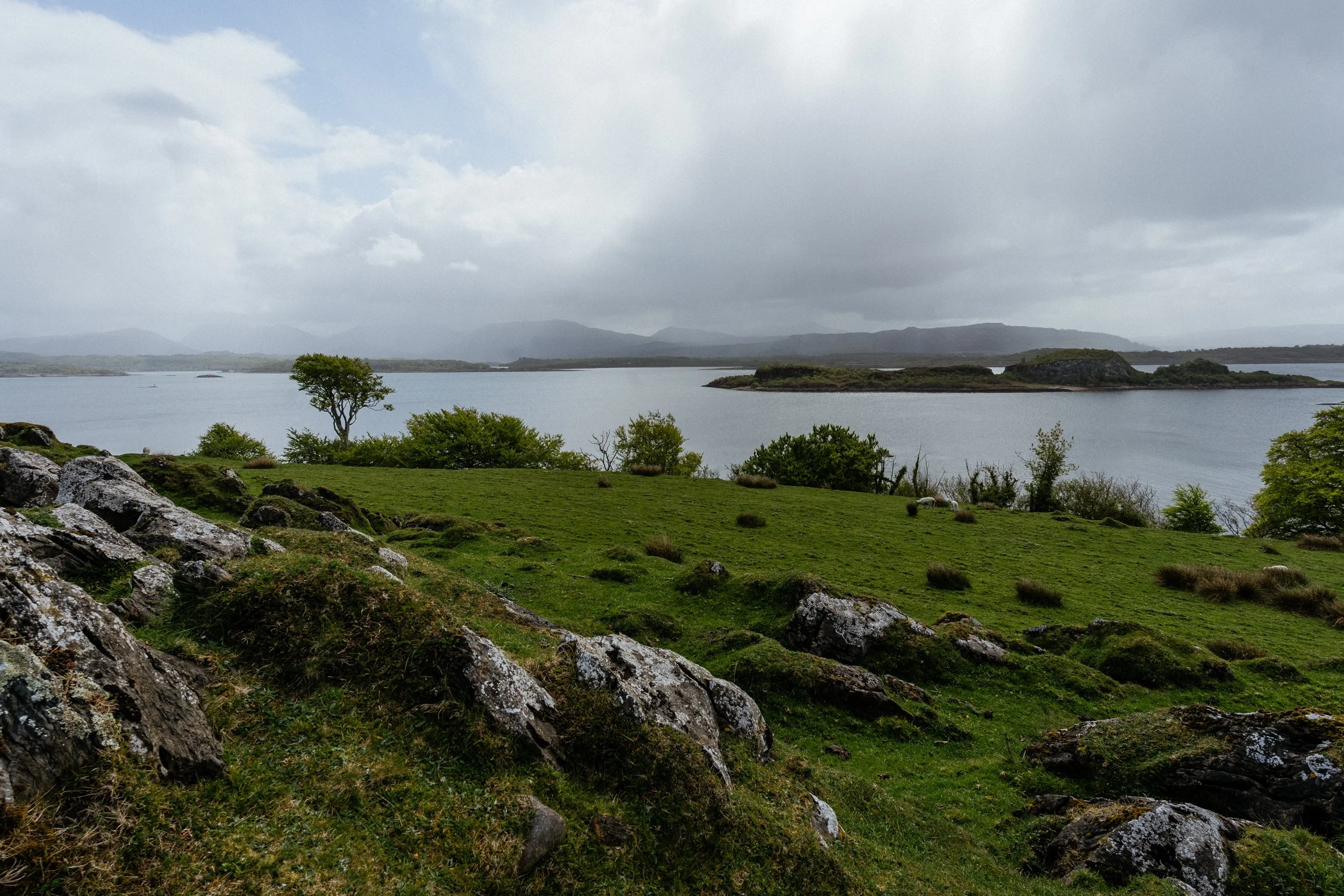
View of Eilean Dubh and mountains looking east from Tirefour Broch on Lismore.
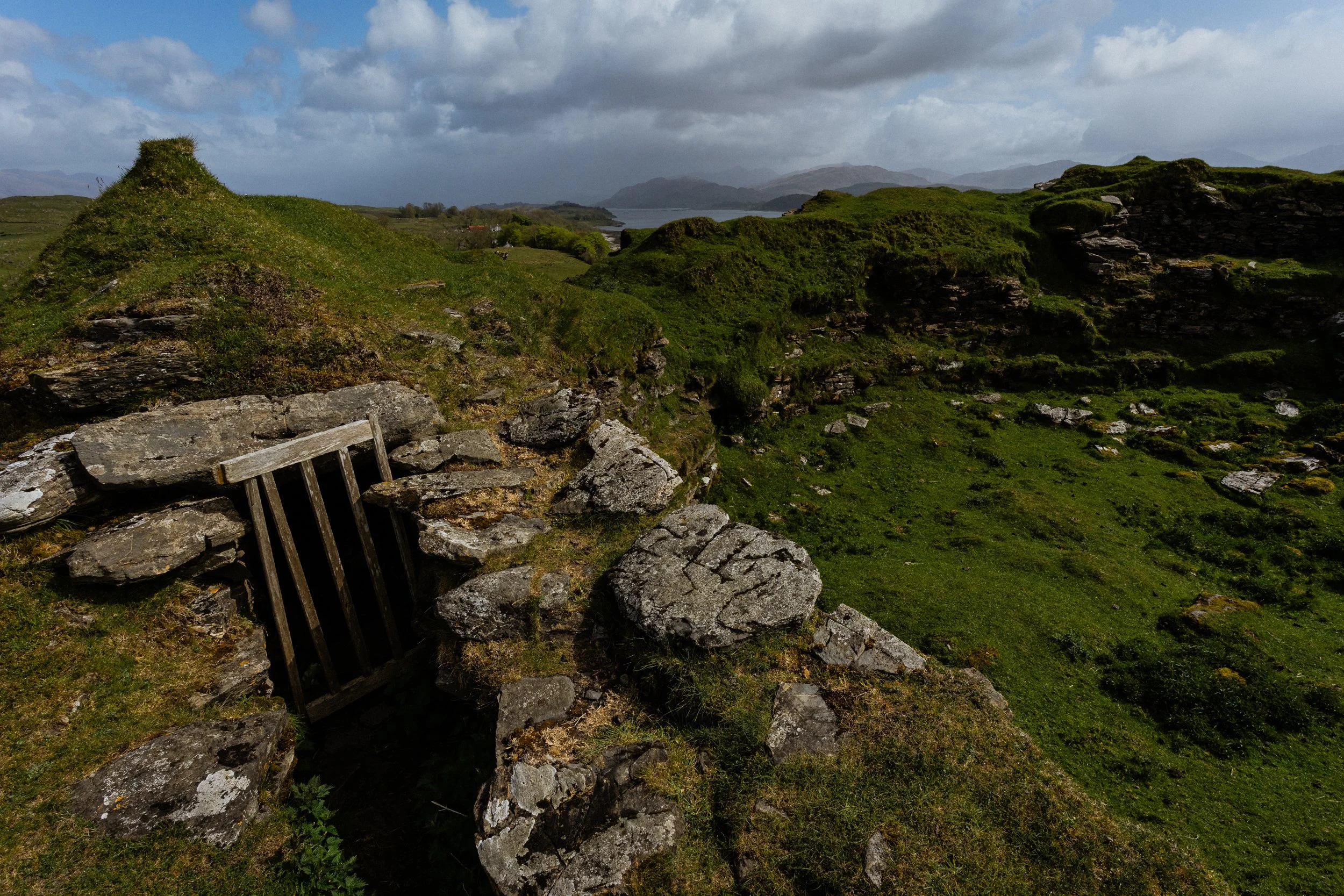
Surviving entrance to interior of Tirefour Broch.
Afterwards, we drove north, past fields of frolicking lambs and the whitewashed cottages at Port Ramsay, then south again, taking a rough road down to the west coast of the island. Winding down through clumps of yellow gorse and gray cliffs, we eventually arrived at a windswept cove called An Sailean, the site of a historic limestone quarry. Remnants of lime kilns and workers’ cottages surround the small rocky pier where locals still catch langoustines in creels. While Iris prepared a picnic for us, Mom and I set out on foot to explore some interesting rock formations near the water’s edge.
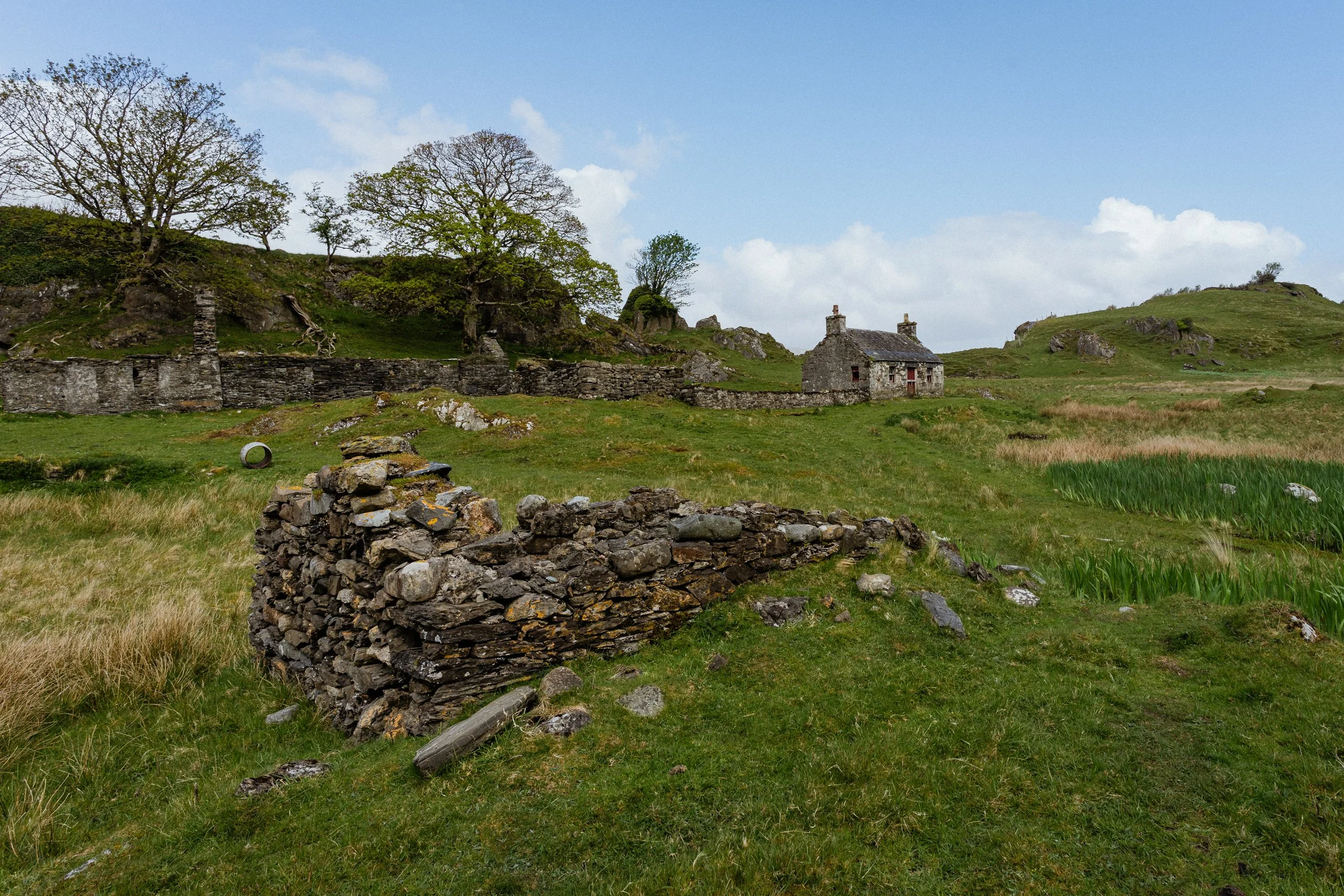
Old cottage and limeworks remnants at An Sailean, Lismore.
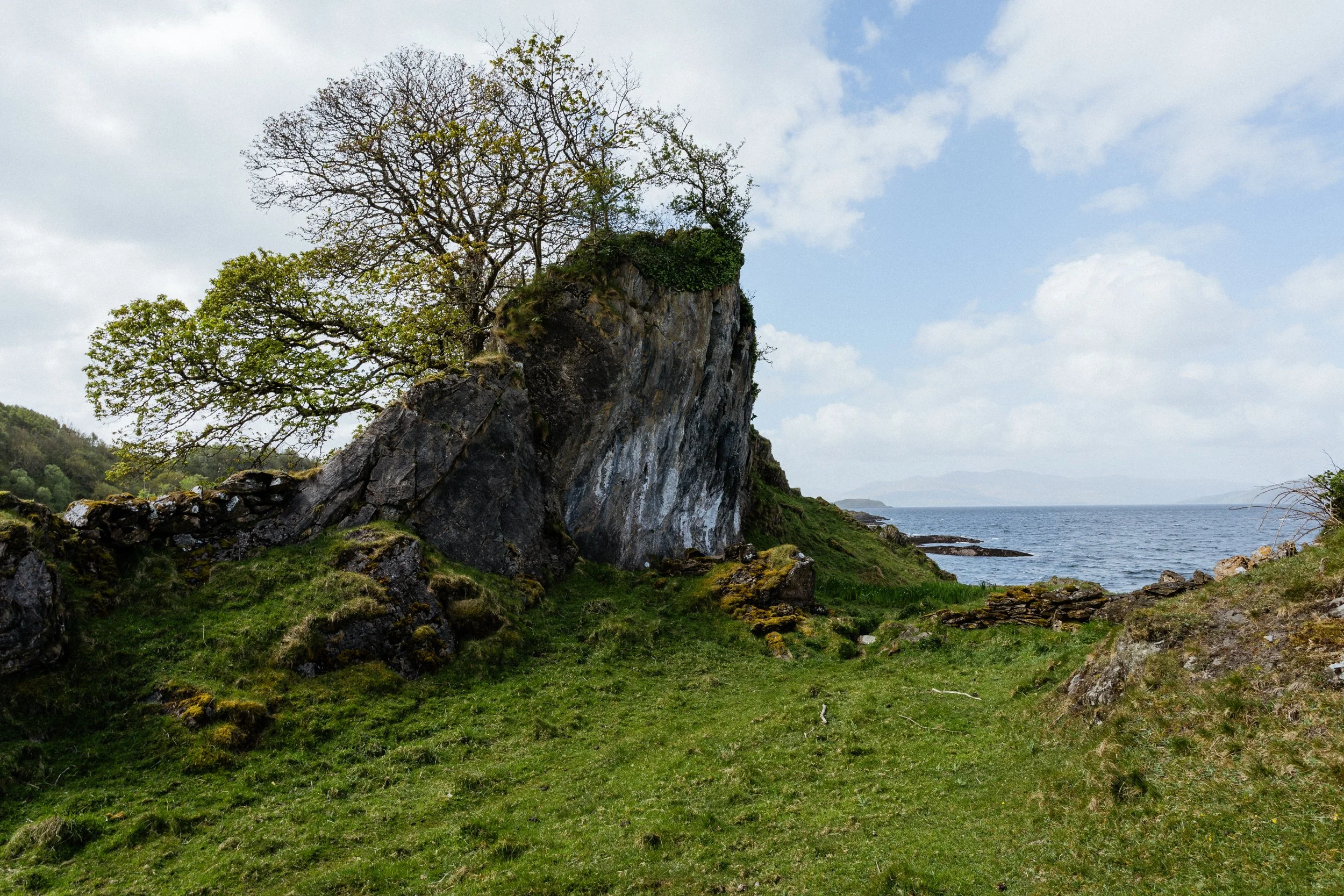
Dramatic rock formations at An Sailean, Lismore.
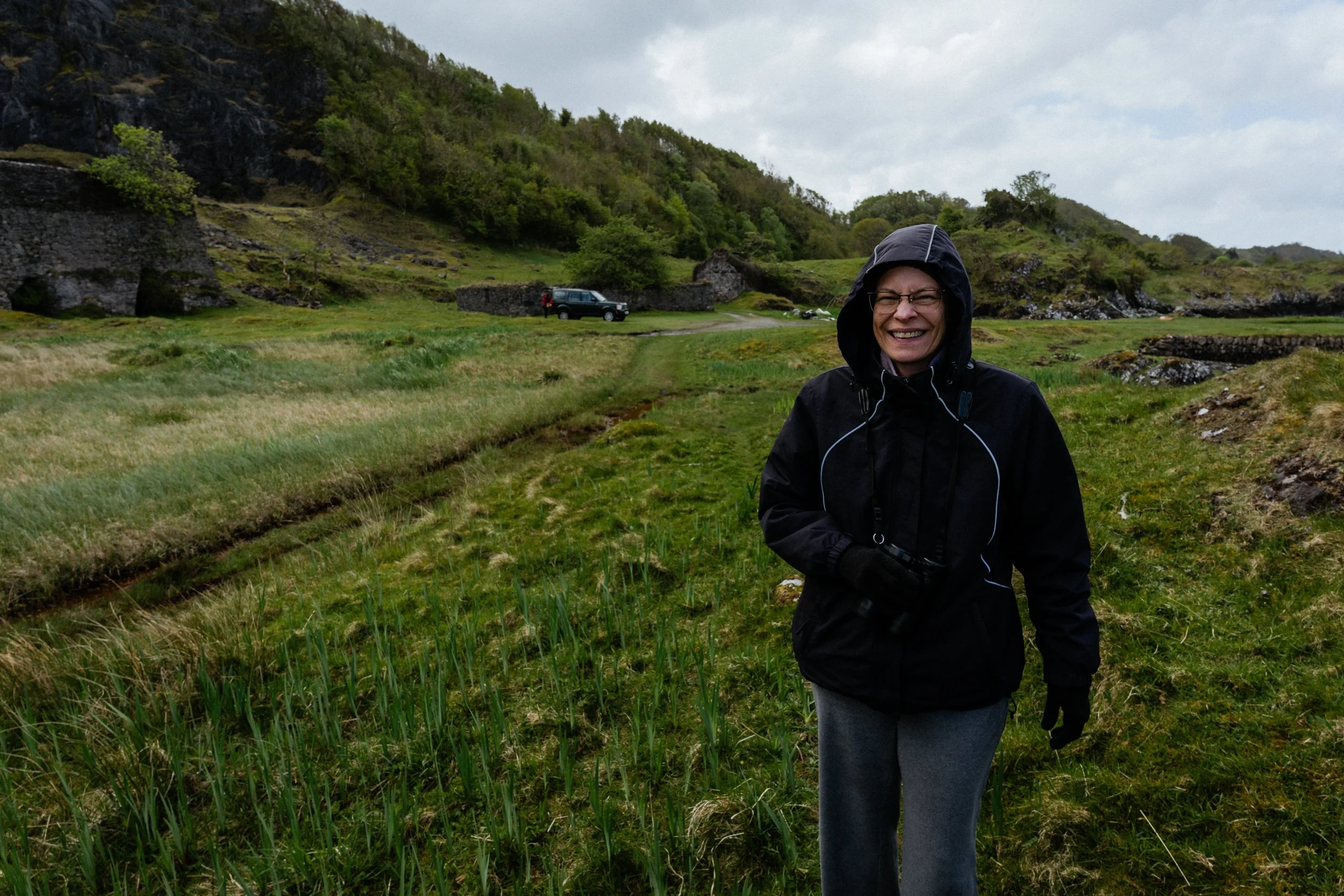
My mother at Sailean with lime kilns and Iris’s Land Rover in the background.
After being out in the wind a while it was heavenly to take shelter at the back of the Land Rover with hot tea and a thick slice of homemade rhubarb pie made by Iris herself. As we started back up the narrow road, she pointed out various blooming wildflowers to us: primrose, bluebells, water avens, and the beautiful early-purple orchid.
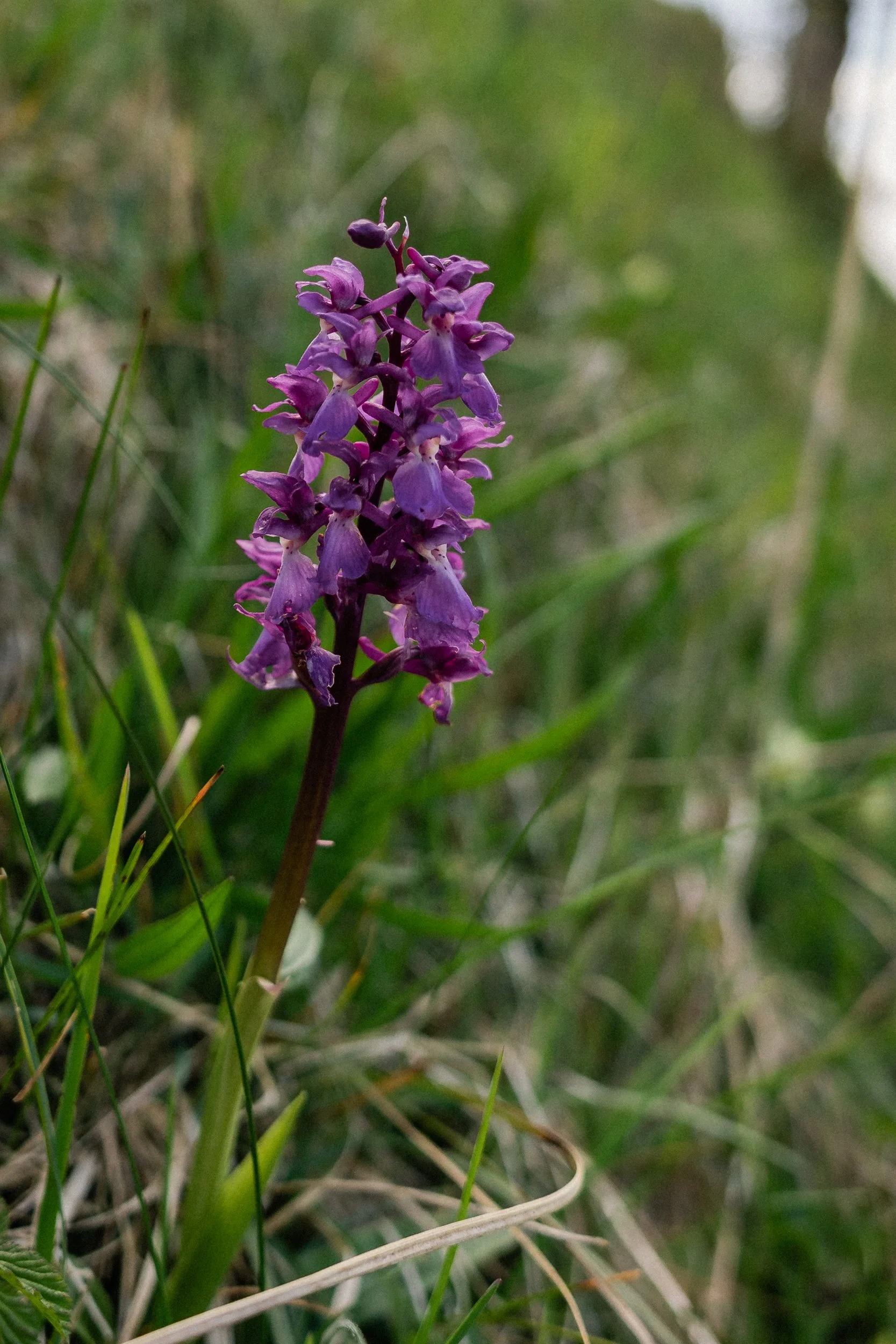
Early-purple orchid
One of the first wild orchids to bloom in Europe each year, these wildflowers proliferate in hedgerows and verges all over the island. They may also be the “long purples” that Shakespeare describes in Hamlet:
Therewith fantastic garlands did she make
Of crow-flowers, nettles, daisies, and long purples,
That liberal shepherds give a grosser name,
But our cold maids do dead men's fingers call them.
We had lunch at the cafe inside Lismore’s Gaelic Heritage Center, which was an absolute gem of a place. There is a free museum and a small gift shop full of local wares. While the cafe serves burgers made from Highland coos, Mom and I opted for cheese toasties and parsnip soup, which were served to us by a friendly old woman who reminded me a lot of my grandma, smoker’s rasp and all. The cafe was the busiest spot we saw on the island, with several groups of British retirees visiting Lismore to hike and cycle.
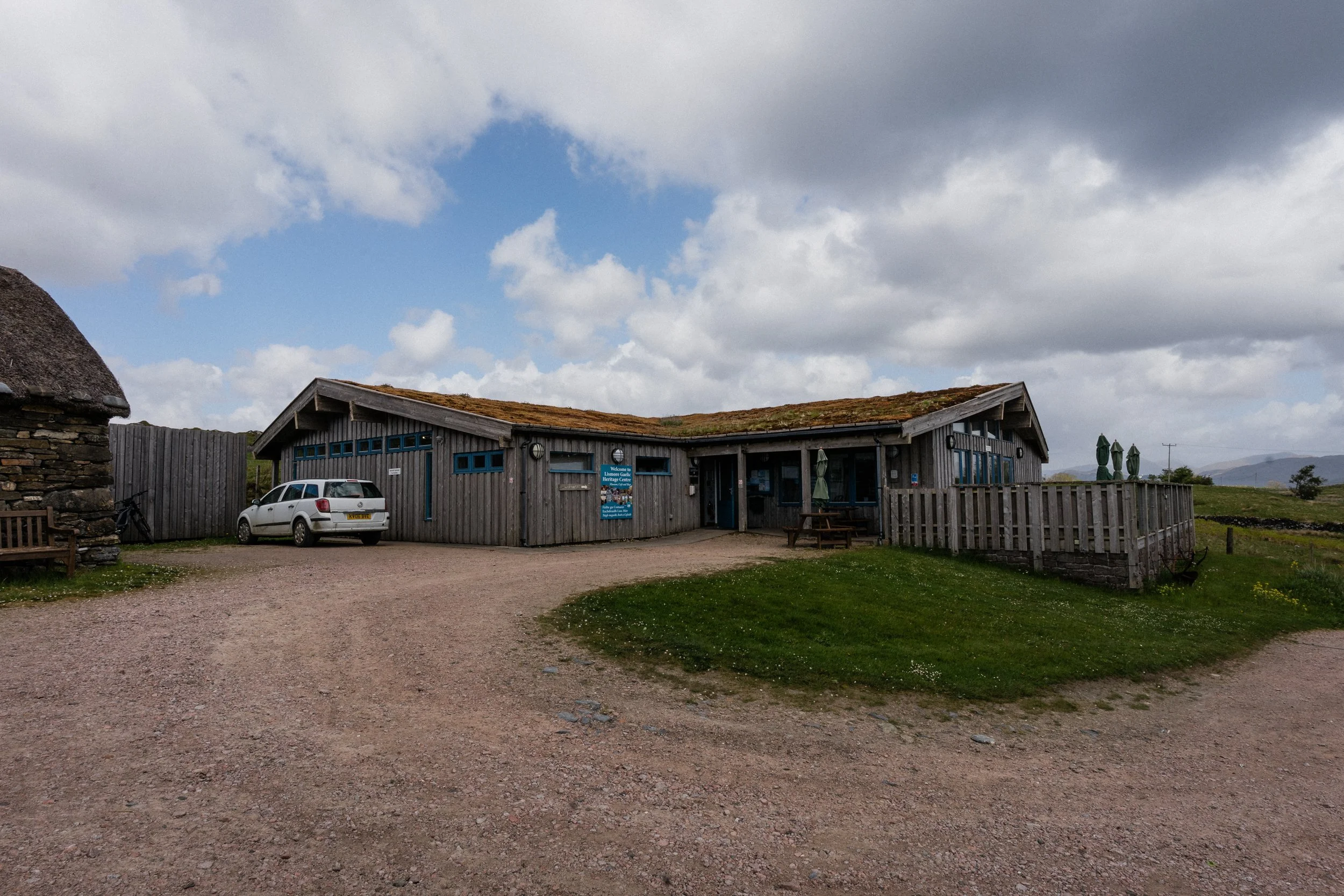
Lismore’s Gaelic Heritage Center and cafe.
After lunch we took a leisurely stroll up the road to the parish church. The present building was built in 1749, but it stands on the site of a 13th century cathedral dedicated to St. Moluag, an Irish missionary who evangelized the Scottish Picts and founded a monastery on the island in the 6th century. Alexander Carmichael, the noted folklorist, is buried in the church’s graveyard.
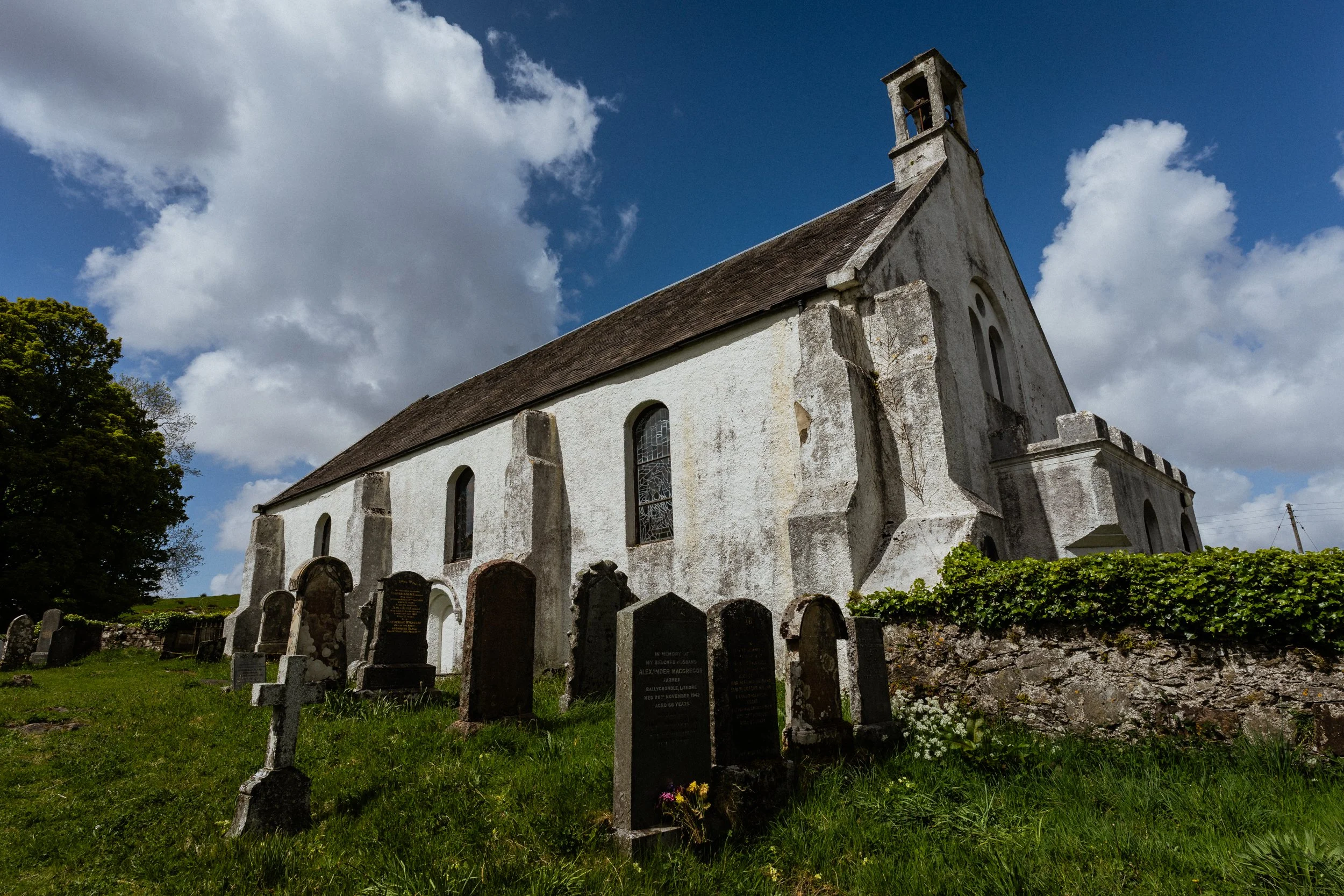
Lismore Parish Church and graveyard.
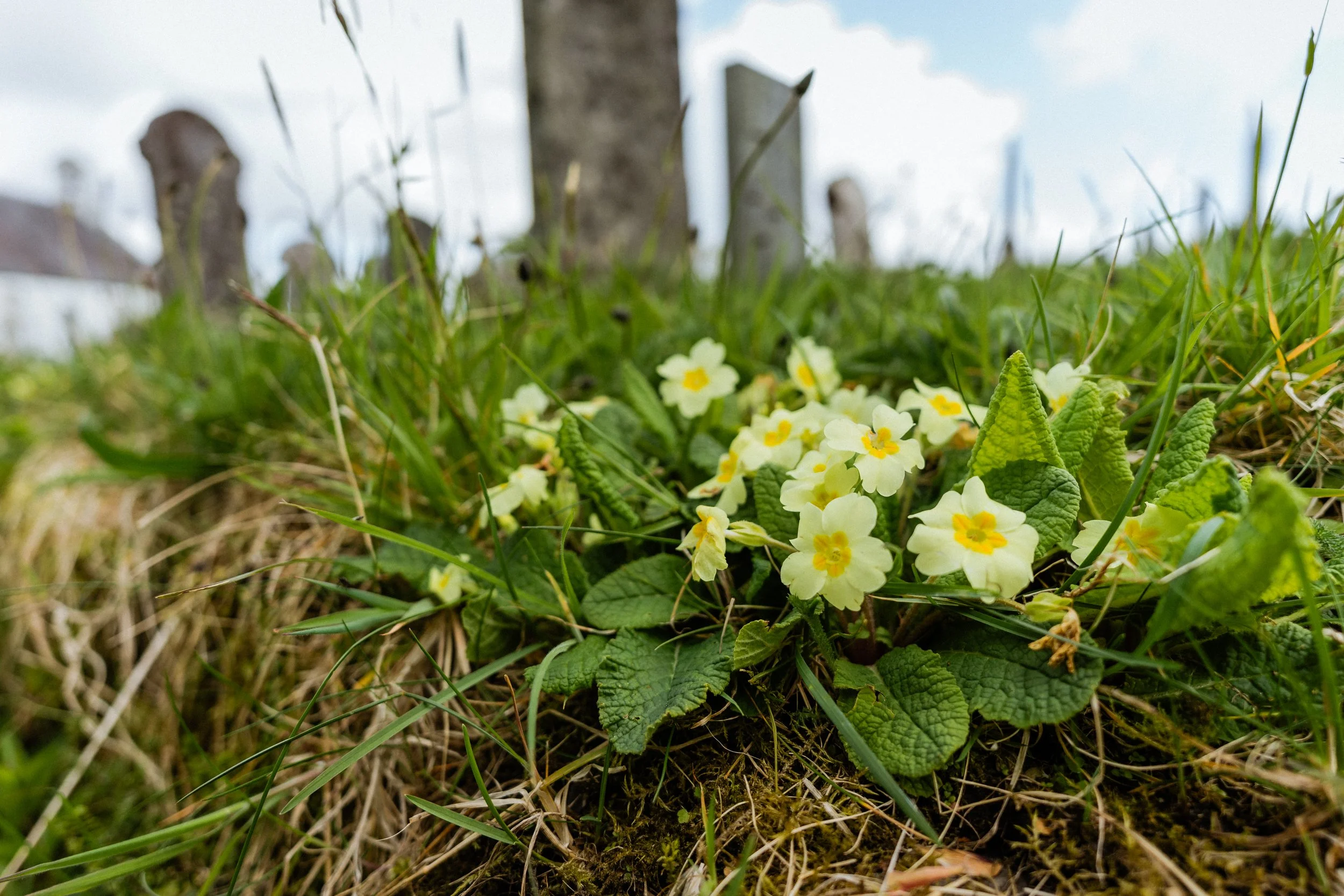
Primroses blooming in the churchyard.
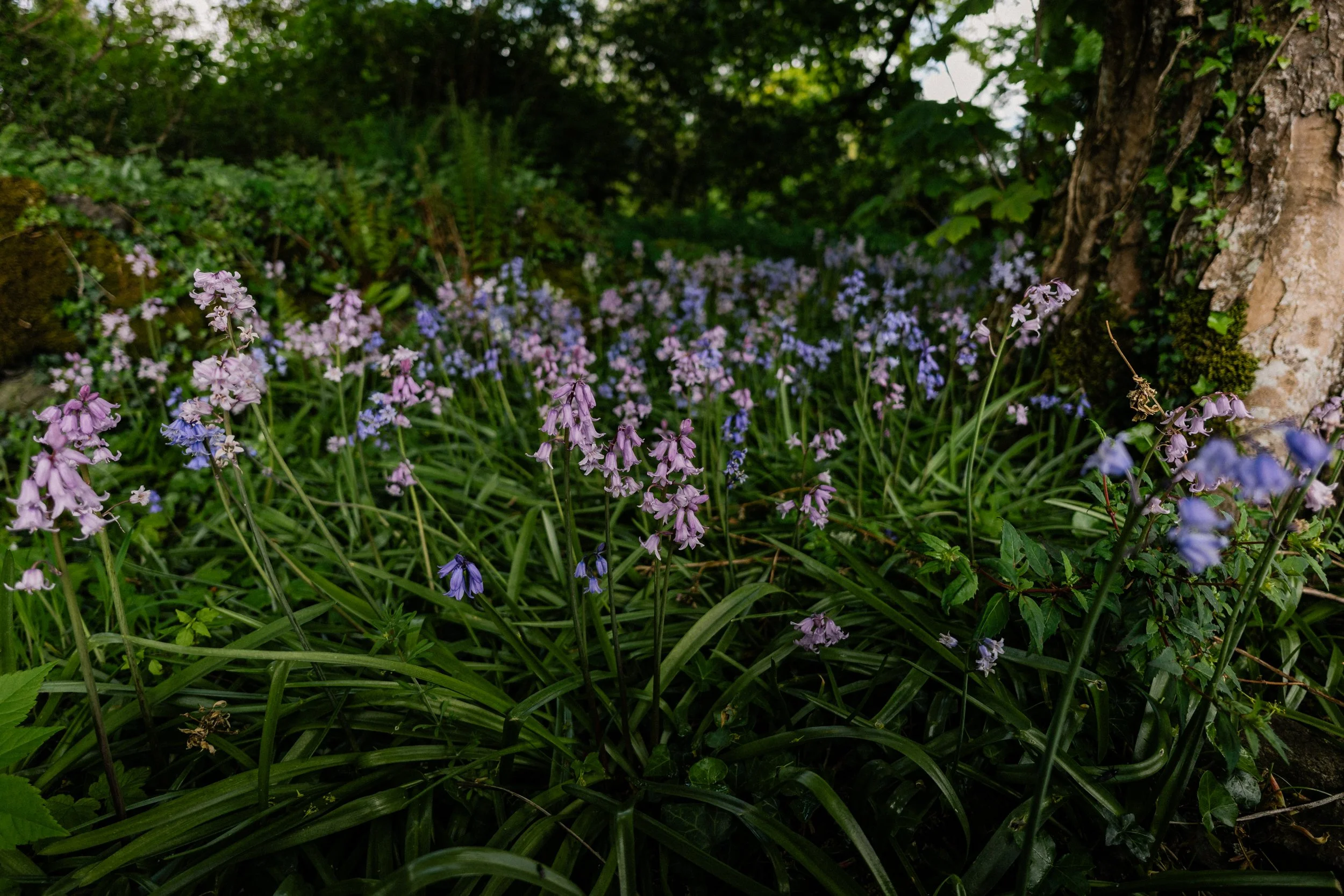
Bluebells along the road to the church.
At last it was time to catch the 3:00 PM ferry back to Oban. As Iris drove us back down to the pier at Achnacroish, the sky darkened again and even dropped some hail on us, but the sun had come back out by the time we reached the water’s edge. I guess you haven’t truly experienced Scotland without a little strange weather.
While we waited for the ferry, we struck up a conversation with another local, a woman with beautiful long silver hair who had returned to the island during Covid after spending years abroad. She described some of the hardships of island living— the expenses, the isolation— but said there was nowhere else on earth she would rather be. She even invited us to visit her cottage if we ever returned!
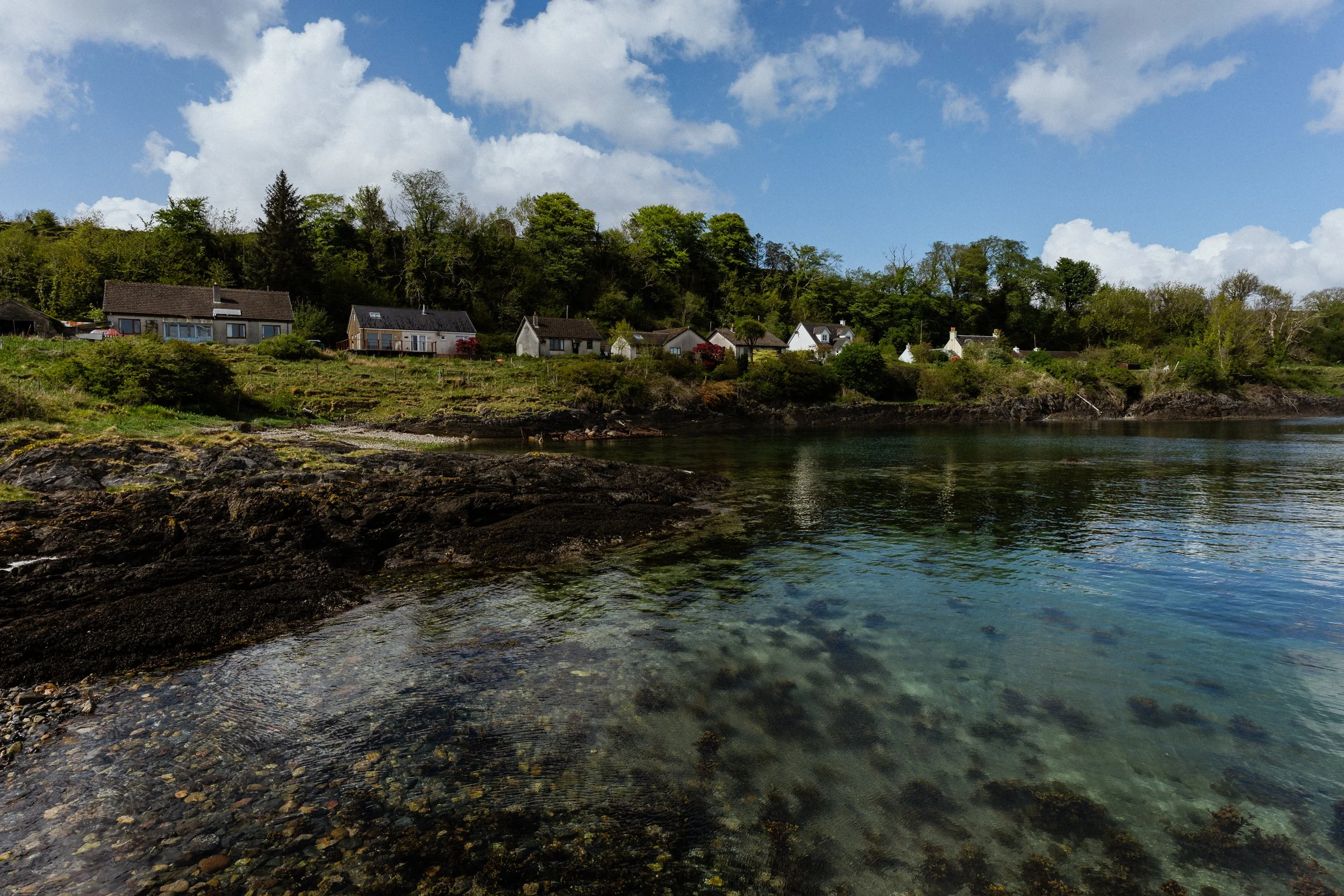
Cottages at Achnacroish near the ferry pier.
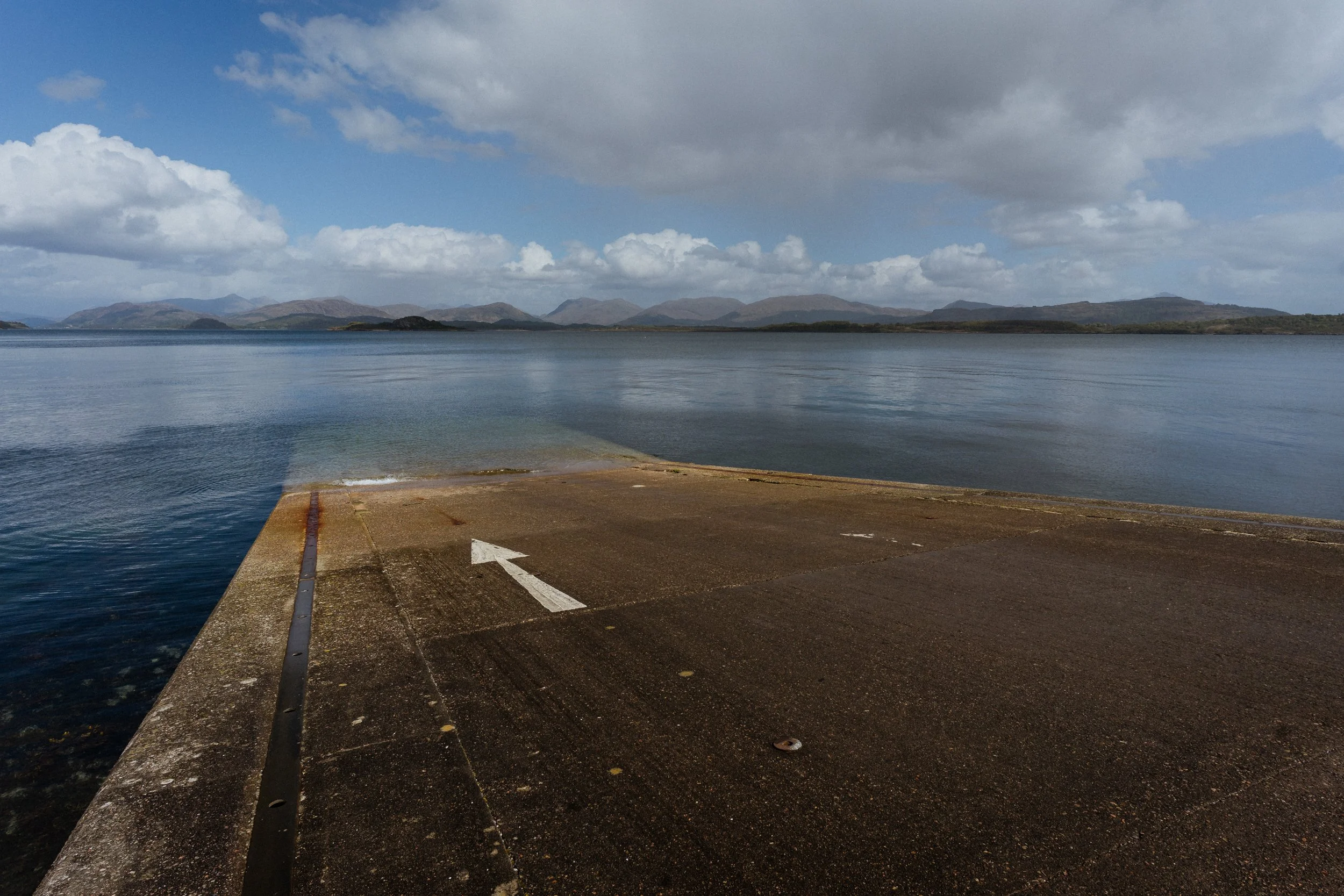
Looking northeast from the ferry pier toward Ben Nevis, Glen Coe and the Grampian Mountains on the mainland.
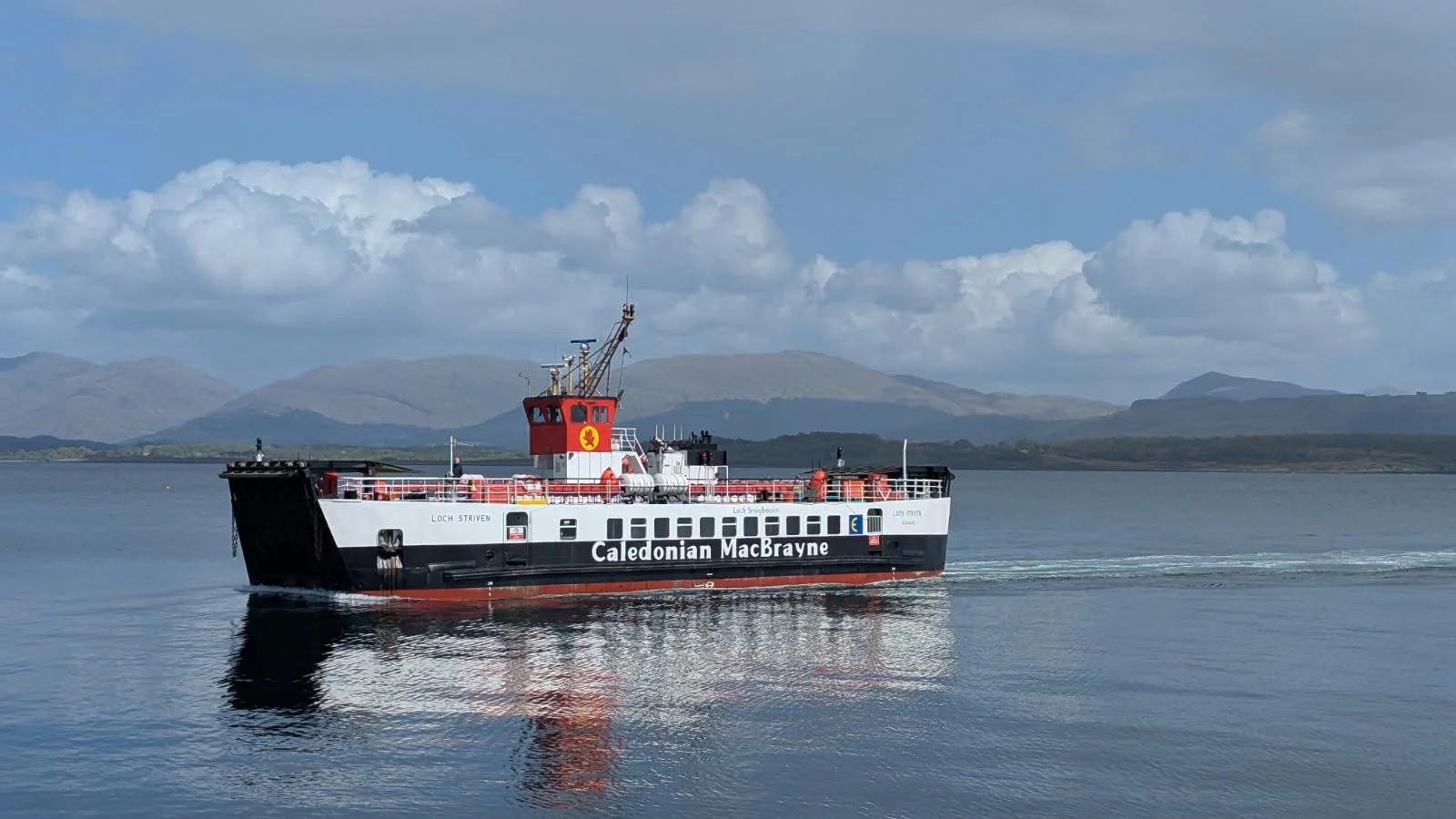
The CalMac ferry.
As the ferry pulled away from the Achnacroish pier, I took a mental picture of Lismore to keep in my mind. Something about this place really spoke to me: the picturesque scenery, the peace and quiet, the friendly people, the culture and history, the raw feeling of isolation. It made me feel small in a good way, part of something much bigger than myself.
I highly recommend a tour with Explore Lismore for anyone interested in visiting the island. This post is not sponsored in any way, but I just had to shout them out for the incredible tour and delicious pie! Thanks Iris!